Disclosure: This post contains affiliate links. We may earn a commission at no extra cost to you.
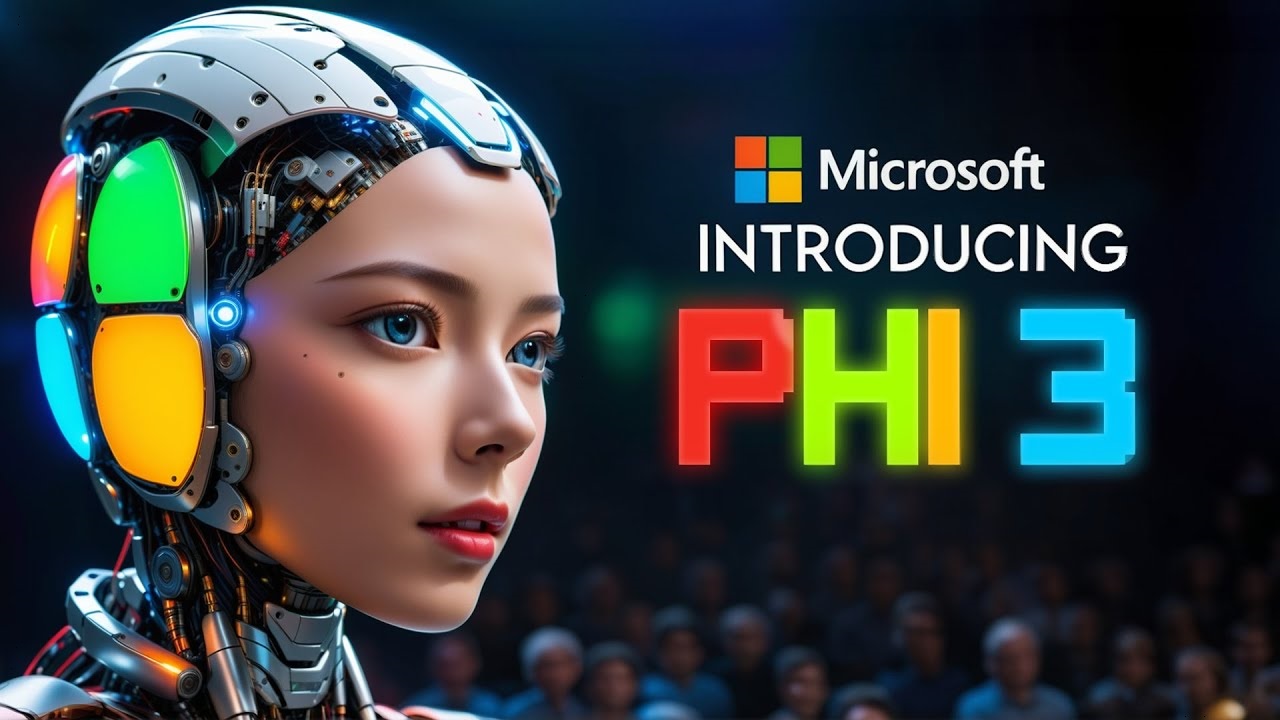
Microsoft has introduced a new multimodal artificial intelligence platform called Phi-3 Vision. With this release, Microsoft expands its Phi-3 compact language model lineup by adding visual understanding capabilities alongside text processing.
Phi-3 Vision is designed to analyze and interpret images, making it a powerful tool for visual reasoning tasks rather than image creation.
Phi-3 Vision Focuses on Image Understanding
Phi-3 Vision comes with 4.2 billion parameters and is optimized for mobile devices and resource-constrained environments. The model allows users to ask high-level questions about images, charts, and visual data and receive detailed, meaningful answers.
Unlike image-generation models such as DALL·E or Stable Diffusion, Phi-3 Vision does not create images. Its strength lies in understanding visual content and extracting insights from existing images.
A New Member of the Phi-3 Model Family
Phi-3 Vision follows the earlier Phi-3 Mini model, which features 3.8 billion parameters. With this addition, the Phi-3 family now includes four models designed for different performance needs.
The lineup consists of Phi-3 Mini, Phi-3 Vision, Phi-3 Small with 7 billion parameters, and Phi-3 Medium. Together, these models cover a wide range of use cases while maintaining efficiency and scalability.
Designed for Efficiency and Mobile Performance
One of the key goals behind Phi-3 Vision is efficiency. The model reflects a growing trend in AI development focused on delivering strong performance while minimizing computing and memory requirements.
Microsoft has already demonstrated the success of this approach with models like Orca-Math, which achieved strong results in arithmetic tasks despite being smaller than many competing models.
Phi-3 Vision continues this direction by offering advanced reasoning abilities without requiring large-scale infrastructure.
Availability and Platform Support
Phi-3 Vision is currently available in preview. Other models in the Phi-3 lineup, including Phi-3 Mini, Phi-3 Small, and Phi-3 Medium, are already available through the Azure model library.
This gives developers early access to experiment with multimodal AI while maintaining compatibility with Microsoft’s broader AI ecosystem.
Why Phi-3 Vision Matters
By focusing on visual understanding rather than generation, Phi-3 Vision fills an important gap in AI capabilities. It enables smarter interpretation of visual data, especially for applications where efficiency and on-device processing are critical.
This makes the model particularly relevant for mobile apps, edge computing, and enterprise tools that rely on understanding images rather than producing them.
Frequently Asked Questions
1. What is Phi-3 Vision
Phi-3 Vision is a multimodal AI model from Microsoft that can analyze and understand images alongside text.
2. Does Phi-3 Vision generate images
No. The model focuses on image analysis and visual reasoning, not image generation.
3. How many parameters does Phi-3 Vision have
Phi-3 Vision has 4.2 billion parameters.
4. Where can developers access Phi-3 Vision
Phi-3 Vision is currently available in preview, while other Phi-3 models are available in the Azure model library.
5. What makes Phi-3 Vision different from other AI models
Its key advantage is efficient visual understanding optimized for mobile and low-resource environments.
Conclusion
Microsoft’s release of Phi-3 Vision highlights a shift toward smarter, more efficient AI models that can operate across a wider range of devices. By combining text processing with visual understanding, Phi-3 Vision expands the capabilities of the Phi-3 family without increasing resource demands.
As multimodal AI becomes more important, models like Phi-3 Vision show how focused design and efficiency can deliver powerful results without relying on massive infrastructure.